The award
The Royal Society Milner Award and Lecture, supported by Microsoft Research in order to help sustain a thriving research community in Europe, is the premier European award for outstanding achievement in computer science. It is awarded to recognise an outstanding European computer scientist, someone who has made a substantial contribution and who is likely to go on to further top-level achievement.
The recipient is a European researcher or researcher who has been resident in Europe for 12 months or more, and is chosen by the Council of the Royal Society on the recommendation of the Milner Award Committee. The Committee is made up of Fellows of the Royal Society, Members of the Académie des sciences (France) and Members of Leopoldina (Germany). The award is named in honour of Professor Robin Milner FRS (1934-2010), a pioneer in computer science. The medal is of bronze, is awarded annually and is accompanied by a gift of £5,000.
Eligibility
The Royal Society Milner award is open to European citizens or those who have been residents for at least 12 months. Nominees cannot be employed by Microsoft and its subsidiaries (full- or part-time), including anybody who had had a remunerative relationship with the company in the 12 months prior to nomination.
While there are no restrictions on career stage, nominees should still be active in their career and not retired, or retired from the post in which the body of research is what they are being nominated for. Early- to mid-career computer scientists should have made major contributions to and impact in their field of research.
Milner Prize Lecture 2025
How to spot and debunk misleading content by Professor Iryna Gurevych took place on Monday 17 November 2025. Watch on the Royal Society's YouTube page.
Nominations are open
Nominations are now open and will close on 20 February 2026.
Spotlight on 2025 winner
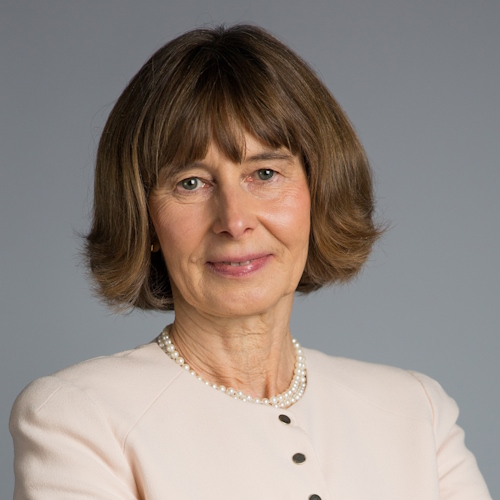
Professor Iryna Gurevych was awarded the Royal Society Milner Award in 2025. She is Professor of Computer Science at the Technical University of Darmstadt, Germany, and also serves as an adjunct professor at Mohamed bin Zayed University of Artificial Intelligence (MBZUAI) in the UAE and the Institute for Computer Science, Artificial Intelligence and Technology (INSAIT) in Bulgaria.
As the first ever LOEWE Chair of Excellence and Distinguished Professor at the National Center for Cybersecurity ATHENE, she brings together a deep understanding of human language and the latest breakthroughs in machine learning.
Speaking about her current area of research and her scientific achievements, Professor Gurevych said:
“My current research spans the intersection of Natural Language Processing (NLP), language-based human–AI collaboration in expert domains and cybersecurity. We study fundamental principles of language modelling by machines, how these technologies can be utilised in real-life applications and how to make them safe for the public.
Misleading content is a special, particularly hard type of misinformation where the information as such may be correct but presented to the audience in such a way that it is led to draw false conclusions. We present new approaches to exposing misleading information in text, images and visualisations.”
“I am being recognised for my contributions to language understanding which combine deep understanding of human language and cognitive faculty with the latest paradigms in machine learning. An example is our work on computing sentence similarities published in 2019, sentence transformers. For the first time, we could efficiently compute sentence-based similarities for a huge amount of text based on pretrained language models. This is the foundation of dense retrieval methods which are the core of Retrieval Augmented Generation used by current Large Language Models (LLMs) at large scale.”
When asked what the one scientific fact, idea, or question she hoped the audience would take away for her Prize Lecture, Professor Gurevych said:
“Everyone must train themselves to be a fact-checker. Cultivate your critical thinking skills! My lecture will equip you with the tools to do so.”