An invitation to join the online audience for the Royal Society's ‘Women in Science: historical perspectives’ conference on Tuesday 18 November.

On Tuesday 18 November, we’ll be continuing our celebrations to mark the 80th anniversary of the election of the first women Fellows of the Royal Society, with a one-day conference ‘Women in Science: historical perspectives’.
The event is fully booked for in-person attendance, but we’ll be ‘going live’ on YouTube, and you’re very welcome to join us online – you’ll be able to watch throughout the day, and to submit questions which we’ll relay to the panels in the Q&A sessions, time permitting.
The conference will look at the often-contested place of women within the scientific community, from eighteenth-century smallpox inoculation and book translation to modern questions of academic mobility and balancing careers with motherhood. A series of talks and discussion sessions will cover breakthroughs and exclusions affecting women researchers, and collaborations between collectors, illustrators and communicators, with speakers from all stages of their research careers presenting recent discoveries.
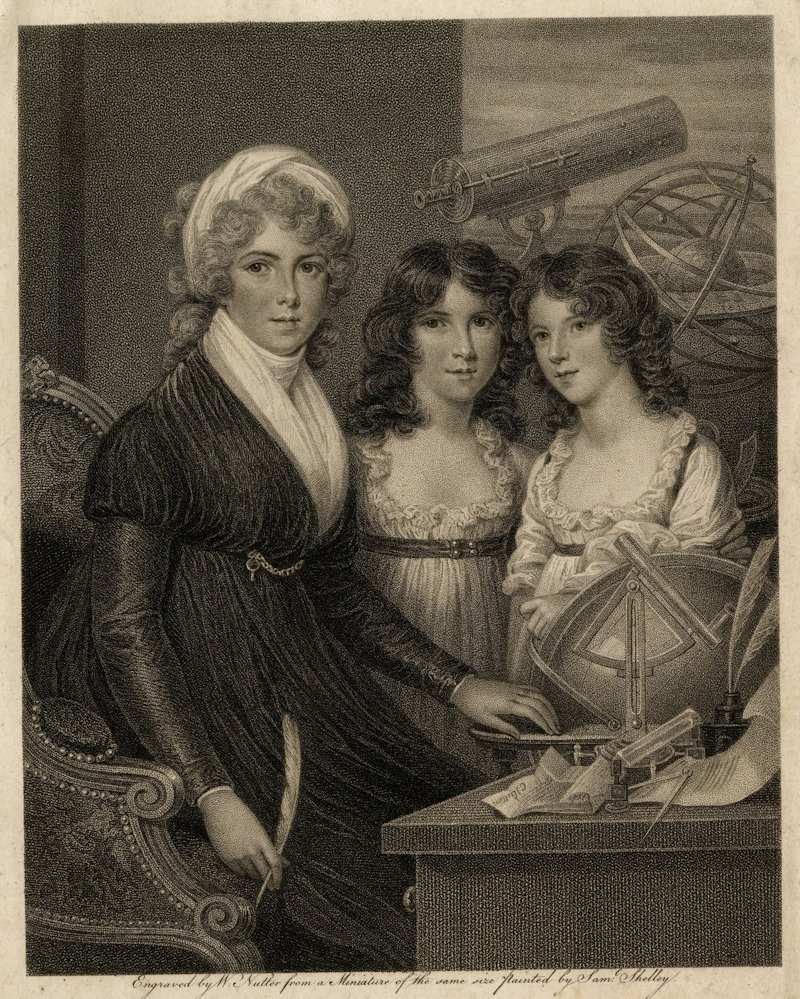 The educator and author Margaret Bryan with her daughters, engraved by William Nutter from a portrait by Samuel Shelley, 1797 (RS.22039)
Following an introduction by Alison Noble FRS, our first session focuses on three eighteenth-century figures: French mathematician and physicist Émilie Du Châtelet, inoculation advocate Lady Mary Wortley Montagu and mapmaker Mary Senex. Astronomy and translation are the topics of our next four talks, highlighting the work of Elizabeth Sabine, Annie Maunder and female members of the Herschel family.
Immediately after the lunch break, there’s a natural history theme, with presentations on dodo-illustrator Catherine Strickland, entomologist Eleanor Ormerod and horticulturalist Ellen Ann Willmott, plus a look at the role of geneticist Nora Barlow in memorialising her grandfather, Charles Darwin. The fourth and final set of talks, chaired by Veronica van Heyningen FRS, will cover the distribution of Royal Society grants to female researchers in the years around 1900, women-led transnational networks in technology, the academic mobility of Indian women scientists, and motherhood and science in Britain since the 1950s.
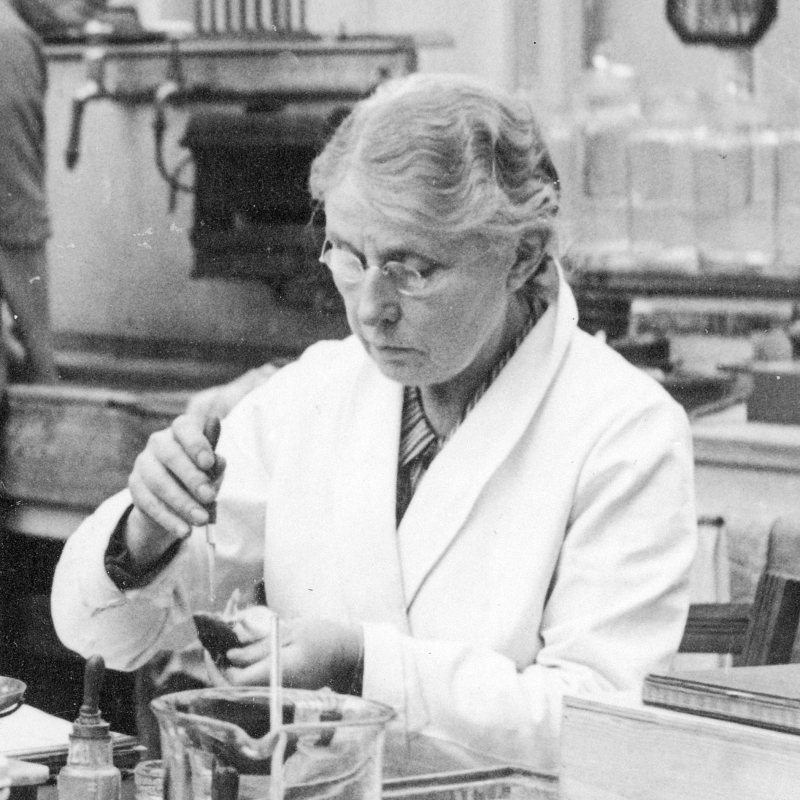
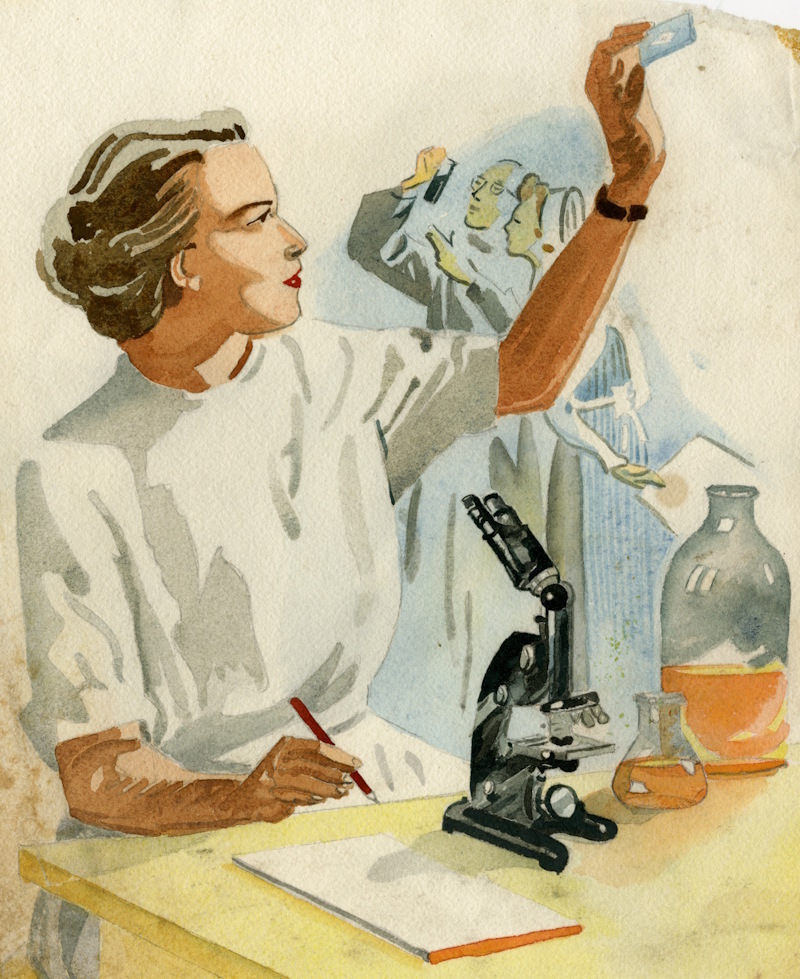 Woman with microscope, ca. 1960s (RS.14159)
Closing the conference with our keynote session, Dame Athene Donald FRS will introduce Stella Butler, whose new book, Breaking the glass ceiling of science, pays tribute to the first eleven women Fellows of the Royal Society. Among their ranks were two crystallographers, one mathematician, three biochemists, two zoologists, a botanist, a cell biologist and a pharmacologist – the keynote session will explore how they opened doors for later generations to work in areas traditionally dominated by men.
If you did get in early enough to book a ticket for the conference, we look forward to seeing you on Tuesday 18 November. While you’re here, and if you haven’t seen it already, do pop down in a coffee or lunch break to visit our linked exhibition in the basement, ‘Nature spoke to her’: women scientists in the Royal Society’. If you’re watching live on the day or planning to catch the recording after the event, then welcome in advance, and we hope you enjoy the presentations.