The award
The Wilkins-Bernal-Medawar Medal and Lecture is given for excellence in a subject relating to the history of science, philosophy of science or the social function of science. The Wilkins, Bernal and Medawar lectures were originally delivered as three separate lectures, each given triennially. Since 2007, they have been combined under the one title of the Wilkins-Bernal-Medawar Lecture. The medal is bronze, is awarded annually and is accompanied by a gift of £2,000.
Eligibility
The Wilkins-Bernal-Medawar Medal and Lecture is open to UK/Commonwealth/Republic of Ireland citizens or those who have been residents for three or more years. There are no restrictions on career stage and nominations will remain valid and shall be considered by the award selection committee throughout three nomination cycles.
For further information on the eligibility criteria and the nominations process, please see our guidance (PDF).
Nominations are open
Nominations are now open and will close on 20 February 2026.
Spotlight on 2025 winner
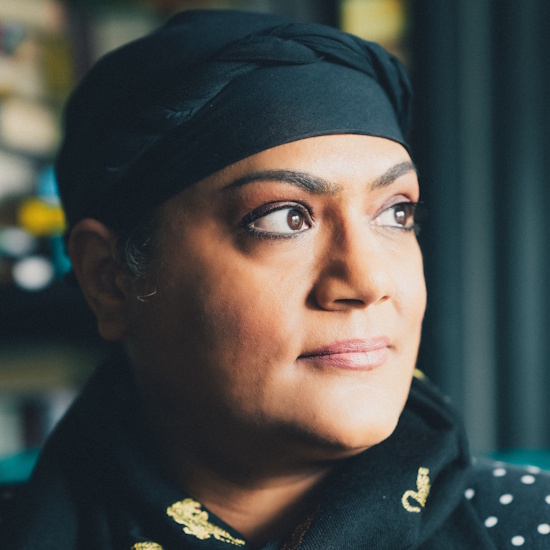
Professor Sadiah Qureshi was awarded the Wilkins-Bernal-Medawar Medal and Lecture in 2025. She joined the University of Manchester in 2023 to take up a Chair in Modern British History. She is currently a Fellow of the Royal Historical Society, Royal Anthropological Institute, and the Linnean Society.
Speaking about her work, Professor Qureshi said:
“Researching extinction means living with restless ghosts. As a historian of race, science, and empire I’m especially troubled by the often-forgotten entanglements between extinction and empire. Histories of extinction tend to provide studies of charismatic animal species or sites while treating current scientific theories about species loss as all that matters for policy-making.
Yet, as I show, new ideas about animal extinction forged in the French revolution were quickly applied to humans. By conflating natural extinction and unnatural extermination, naturalists and politicians argued that colonised peoples were providentially predestined to die out in the face of European imperial expansion, and that some were already extinct. These apocalyptic visions cast long shadows. Claims about lost races were so powerful that many Indigenous nations are still fighting to prove they exist, or have meaningful ties to their homelands.”
Responding to winning the Wilkins-Bernal-Medawar Medal and Lecture, Professor Qureshi said:
“I am astonished in the best possible way. I've spent my career tracing the legacies of scientific thought and learned societies. To be awarded this medal in recognition of my research is an unexpected delight and honour.
I would love for the award to lead to more people thinking about the present-day political significance of histories of extinction, and science more broadly, especially in terms of protecting life on earth.”